What Heat To Cook Chicken Thighs In Oven For Juicy Results
Want juicy chicken thighs every time? The secret starts with what heat to cook chicken thighs in oven. This guide reveals the perfect oven temperature for tender, flavorful meat, plus tips for bone-in chicken thighs and crispy skin. Say goodbye to dry chicken and hello to easy oven-baked chicken that wows your family.
Chicken thighs are one of the most affordable and flavorful cuts you can buy. They stay juicy even if you cook them a few minutes too long. But nailing the right oven temperature for chicken thighs takes them from good to amazing. The key question is: what heat to cook chicken thighs in oven? The answer depends on whether you want crispy skin or fall-off-the-bone tender meat. This guide gives you all the answers.
Many home cooks guess at the baking temperature and end up with dry or soggy results. That is frustrating when you just want a simple easy chicken dinner. I have tested dozens of methods to find the sweet spot. You will learn the exact oven-baked chicken settings, cook time ranges, and pro tips. By the end, you will never overcook chicken thighs again.
Key Takeaways
- 375°F is the safe default: This baking temperature works for most bone-in chicken thighs and gives even cooking.
- 425°F makes crispy skin: Use high heat when you want a crunchy, golden finish on skin-on chicken.
- Always use a meat thermometer: The internal temperature of 165°F is the only way to know for sure.
- Rest the chicken for 5-10 minutes: This keeps juicy chicken from drying out after baking.
- Bone-in takes longer than boneless: Adjust your cook time based on the cut you choose.
- Pat the skin dry first: Dry skin crisps up much better than wet skin in the oven.
- Use a wire rack for even airflow: It helps both sides of the roasted chicken thighs get crispy.
📑 Table of Contents
What Heat To Cook Chicken Thighs In Oven: The Golden Rule
The best oven temperature for chicken thighs falls between 375°F and 425°F. Most recipes land at 375°F because it is a safe, even heat. That baking temperature cooks bone-in chicken thighs through without burning the outside. If you want a dinner idea with crispy skin, bump it up to 425°F. This high heat method works great for skin-on chicken. Lower heat at 325°F is best for a low and slow approach that gives very tender meat.
The right heat depends on three things: the cut, the skin, and your oven. Bone-in vs boneless matters a lot. Bone-in pieces need more time but stay juicier. Boneless chicken thighs cook faster but can dry out. Skin-on chicken benefits from higher heat to crisp up. Skinless chicken does better at moderate temperatures. Here is a quick look at the main options.
Bone-In vs. Boneless Chicken Thighs
Bone-in chicken thighs have a small bone that adds flavor and keeps moisture locked in. They take about 40 to 50 minutes at 375°F. The bone slows cooking, so the meat stays juicy chicken longer. Boneless chicken thighs cook in about 25 to 35 minutes at the same temperature. They are great for quick easy chicken dinner nights. Always check the internal temperature of 165°F in the thickest part.
Here is a simple comparison table to help you choose.
| Cut | Best Heat | Cook Time (approx.) | Result |
|---|---|---|---|
| Bone-in, skin-on | 425°F for crispy skin | 40–50 min | Crispy skin, tender meat |
| Bone-in, skinless | 375°F | 35–45 min | Juicy, no crispy skin |
| Boneless, skin-on | 400°F | 25–35 min | Crispy skin, fast cook |
| Boneless, skinless | 375°F | 20–30 min | Mild flavor, easy to dry |
Why Skin-On Chicken Needs Higher Heat
Skin-on chicken acts like a natural wrapper. The skin holds moisture inside while the oven heats the meat. But to get that satisfying crunch, you need high heat. A baking temperature of 425°F or 450°F renders the fat under the skin. It also browns the protein for a golden finish. This is the secret behind restaurant-quality roasted chicken thighs. At lower heats, the skin just turns rubbery and pale.
If you want crispy skin without burning, pat the skin bone dry with paper towels first. Then rub a thin layer of oil or butter on it. The fat helps conduct heat evenly. This simple step makes a huge difference in your oven-baked chicken results.
Quick Tip: Always Preheat Your Oven
Never put chicken thighs into a cold oven. Preheating ensures the baking temperature is accurate from the start. A hot oven sears the outside quickly, locking in juices. Give your oven at least 15 to 20 minutes to reach the target heat. Use an oven thermometer if you are unsure. Many home ovens run hot or cold by 25 degrees.
How Long to Bake Chicken Thighs
The cook time for chicken thighs varies by oven temperature. The three most common methods are 375°F, 425°F, and 325°F. Each one serves a different goal. I will walk you through each method so you can pick the right one for your dinner idea.
The 375°F Standard Method
375°F is the most popular oven temperature for chicken thighs. It works for almost every type of bone-in chicken thighs and boneless chicken thighs. At this baking temperature, bone-in skinless thighs take about 40 minutes. Bone-in skin-on thighs take 45 to 50 minutes. Boneless thighs finish in 25 to 30 minutes. This method gives you juicy chicken with a gentle cook. It is perfect for a weeknight easy chicken dinner.
Why does 375°F work so well? It heats the chicken evenly from all sides. The outside does not burn before the inside reaches 165°F. This is the safest and most forgiving heat for beginners. If you are unsure what setting to use, start here.
High-Heat 425°F for Crispy Skin
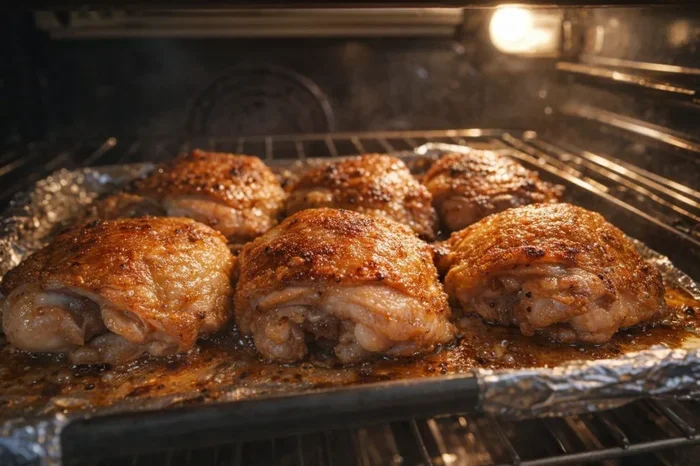
For the best crispy skin, use 425°F. This high heat method is my go-to for roasted chicken thighs. The intense heat quickly renders the fat under the skin. It also creates a Maillard reaction, which gives that deep golden color and rich flavor. Bone-in skin-on thighs bake in 35 to 40 minutes at 425°F. Boneless skin-on thighs take just 20 to 25 minutes.
The trade-off is that high heat can dry out boneless skinless pieces faster. So stick with skin-on cuts when you use this method. Always use a wire rack over a baking sheet. The rack lets hot air flow under the chicken, crisping both sides evenly. This is a pro trick for perfect oven-baked chicken.
Low and Slow 325°F for Tender Meat
A low and slow approach at 325°F gives the most tender result. This method is great for bone-in chicken thighs with a lot of connective tissue. The long, gentle heat breaks down collagen slowly. The meat becomes fall-apart tender and incredibly juicy. Cook times range from 60 to 75 minutes at 325°F. This heat is ideal if you want to set it and forget it.
Low heat does not give you crispy skin though. The skin will be soft and pale. If you want crunch, you can finish the chicken thighs under the broiler for 3 to 5 minutes. Just watch them closely so they do not burn. This oven-baked chicken method is perfect for a Sunday dinner idea when you have time to relax.
Common Mistake: Overcrowding the Pan
One of the biggest mistakes is placing chicken thighs too close together. Overcrowding traps steam and creates soggy skin. The baking temperature cannot circulate properly. Leave at least half an inch of space between each piece. Use a large baking sheet or two pans if needed. This simple change gives you crispier results every time.
Internal Temperature: The Only Number That Matters
The internal temperature is the ultimate guide for juicy chicken. Visual cues like color or juice color can fool you. The only way to know for sure is with a meat thermometer. Insert it into the thickest part of the thigh, avoiding the bone. The safe internal temperature is 165°F. But many chefs pull chicken thighs at 160°F and let carryover cooking finish the job.
Carryover cooking means the chicken continues to rise in temperature after you take it out. This is especially true for bone-in chicken thighs because the bone retains heat. Letting the chicken rest also redistributes the juices. Cutting too early lets all those flavorful juices run out onto the cutting board. That is how you end up with dry meat.
Using a Meat Thermometer Correctly
A digital instant-read thermometer is the best tool for oven-baked chicken. Dial thermometers are slower and less accurate. Place the probe in the center of the meat, not touching the bone. Wait for the reading to stabilize. If you do not have a thermometer, make a small cut in the thickest part. The meat should be opaque white all the way through. Any pink means it needs more time.
For bone-in skin-on thighs, aim for 160°F and then rest for 5 minutes. The temperature will climb to 165°F. This gives you perfectly tender meat without overcooking. It is the best heat and time combination for flavorful chicken.
Resting Time for Juicy Results
Resting is not just a suggestion—it is essential. When chicken thighs come out of the oven, they are very hot. The juices are concentrated in the center. If you cut right away, the juices escape and the meat dries out. Let the roasted chicken thighs rest on a warm plate for 5 to 10 minutes. This allows the juices to relax and spread evenly. The result is juicy chicken that is tender and full of flavor.
Use this resting time to make a quick pan sauce. Deglaze the baking sheet with chicken broth, scrape up the browned bits, and simmer for a few minutes. Pour it over the chicken thighs for an instant chicken thighs recipe upgrade.
Expert Insight: Carryover Cooking
Many home cooks do not know about carryover cooking. It is the reason professional chefs pull chicken off the heat early. The residual heat inside the thickest part continues to cook the meat. This effect is stronger in bone-in chicken thighs because the bone acts like a heat reservoir. Pulling at 160°F instead of 165°F gives you a safer margin for perfect doneness. It is a small change that makes a big difference in your easy chicken dinner results.
Crispy Skin Secrets: Getting Perfect Texture
Crispy skin is what separates good oven-baked chicken from great roasted chicken thighs. The baking temperature matters, but so do your prep steps. You can achieve restaurant-quality crunch at home with a few simple techniques. These tips work for both skin-on chicken and boneless skin-on pieces.
Pat Dry and Season Well
The single most important step is drying the skin. Remove the chicken thighs from the fridge 20 to 30 minutes before cooking. Pat them completely dry with paper towels. Any surface moisture turns to steam, which prevents crisping. After drying, rub the skin with a thin layer of oil or melted butter. Then season generously with salt and pepper. Salt draws out a little moisture, which then evaporates and helps the skin crisp up.
For extra flavor, add paprika, garlic powder, or dried herbs like thyme. This creates a chicken thighs recipe that is hard to resist. The seasoning also helps the skin brown faster in the oven.
The Role of a Baking Rack
A wire rack set over a baking sheet is the best tool for crispy chicken thighs. It lifts the meat off the pan, allowing hot air to flow underneath. This means both the top and bottom skin get crispy. Without a rack, the bottom side sits in its own rendered fat and steams. The result is soggy skin on one side. A rack ensures even heat circulation and perfectly crunchy texture. If you do not have a rack, you can use a cooling rack placed on a sheet pan.
Quick Tip: Start Skin-Side Down
Place the chicken thighs skin-side down on the rack for the first half of cooking. This renders the fat and crisps the skin from the top. Then flip them skin-side up for the last 10 minutes. This double approach gives you even browning and a shatteringly crisp finish. It is a simple trick that elevates your oven-baked chicken every time.
Common Mistakes That Ruin Oven-Baked Chicken
Even with the right heat, small mistakes can ruin your chicken thighs. I see these errors often, and they are easy to avoid. Follow these tips to get perfect juicy chicken every single time.
Skipping the Rest
Cutting into chicken thighs right after they come out of the oven is a huge mistake. The juices are under high pressure inside the meat. When you slice, they escape and the chicken dries out. Let the roasted chicken thighs rest for at least 5 minutes. Tent them loosely with foil if you want to keep them warm. The internal temperature will still be safe while the meat becomes more tender.
Wrong Oven Rack Position
Where you place the baking sheet matters. The top rack exposes the chicken to direct heat, which can burn the skin before the inside is done. The bottom rack is too far from the heating element, leading to pale skin. The middle rack gives the most even heat distribution. It allows air to circulate around the chicken thighs properly. Always bake on the middle oven rack for best results.
Not Letting Chicken Come to Room Temperature
Cold chicken thighs straight from the fridge cook unevenly. The outside overcooks while the inside stays underdone. Let the chicken sit on the counter for 20 to 30 minutes before baking. This small step ensures more even cook time and better tender meat. It also reduces the risk of dry chicken. This is a trick that professional chicken thighs recipe developers always recommend.
Easy Chicken Thighs Recipes to Try Tonight
Now that you know the heat and cook time, here are two simple chicken thighs recipes you can make tonight. Both use the what heat to cook chicken thighs in oven principles we covered.
Herb-Crusted Baked Chicken Thighs
Preheat your oven to 400°F. Pat bone-in skin-on chicken thighs dry and rub with olive oil. Mix chopped rosemary, thyme, garlic, salt, and pepper. Press the herb mixture onto the skin. Place skin-side up on a wire rack over a baking sheet. Bake for 35 to 40 minutes until the internal temperature hits 160°F. Let rest for 5 minutes. The herbs form a fragrant crust that pairs perfectly with roasted vegetables.
Spicy Paprika Roasted Chicken
For a dinner idea with a kick, use 425°F. Blend smoked paprika, cumin, chili powder, garlic powder, and a little oil. Coat boneless skin-on chicken thighs with the spice rub. Bake on a wire rack for 20 to 25 minutes. The high heat caramelizes the spices into a beautiful red crust. Serve with rice and a simple salad for a complete easy chicken dinner. This oven-baked chicken is bold, flavorful, and foolproof.
Conclusion
The secret to perfect chicken thighs is understanding what heat to cook chicken thighs in oven. Use 375°F for safe, even cooking. Use 425°F for crispy skin-on chicken. Use 325°F for a low and slow tender result. Always check the internal temperature with a meat thermometer. Let the chicken rest before you cut it. And never skip drying the skin for maximum crunch. With these simple steps, you can serve juicy chicken and crispy skin every time. Your family will love this easy chicken dinner. So preheat that oven and enjoy your next roasted chicken thighs night.
Frequently Asked Questions
What is the best heat to cook chicken thighs in oven?
375°F is the best all-around oven temperature for chicken thighs. It cooks bone-in chicken thighs evenly and keeps them juicy. If you want crispy skin, use 425°F for a shorter cook time with a golden finish.
How long do you bake chicken thighs at 375°F?
Bone-in skin-on thighs take 45 to 50 minutes. Bone-in skinless take 40 minutes. Boneless thighs finish in 25 to 30 minutes. Always check that the internal temperature reaches 165°F in the thickest part.
Should I cover chicken thighs with foil in the oven?
No, leave the chicken thighs uncovered for crispy skin. Covering traps steam and makes the skin soggy. If the top is browning too fast, you can tent loosely with foil for the last 10 minutes.
Can I use a convection oven for chicken thighs?
Yes, convection ovens work great for oven-baked chicken. Reduce the baking temperature by 25°F because the fan circulates heat more efficiently. Check for doneness a few minutes early to avoid overcooking.
Why are my oven-baked chicken thighs dry?
Dry chicken thighs usually come from overcooking or skipping the rest. Use a meat thermometer and pull the chicken at 160°F. Let it rest for 5 to 10 minutes so the juices redistribute. Also, avoid overcrowding the pan, which can cause uneven cooking.
What is the difference between bone-in and boneless chicken thighs for oven baking?
Bone-in chicken thighs take longer to cook but stay juicier because the bone insulates the meat. Boneless chicken thighs cook faster but can dry out if you leave them too long. Adjust your cook time and heat accordingly for the best tender meat.